At most companies, it isn't information that's missing. It's shared knowledge.
When a new colleague joins, the HR team often faces the same challenge:
the information they need exists, but it's scattered.
The new hire's questions sound familiar:
- Where do I find the home office policy?
- How long exactly is the probation period?
- How does requesting leave work?
- Who approves expense reports?
- Where is the health and safety documentation?
The answers are usually spread across several places:
- SharePoint folders,
- PDF documents,
- the intranet,
- email attachments,
- or simply in the head of an experienced colleague.
Meanwhile, the HR team keeps answering the same questions over and over again.
A large part of corporate knowledge is never documented
Many organizations believe they have adequate documentation.
In reality, however, much of how things actually work relies on informal knowledge.
"That's just how we do it."
"Ask Eve about that."
"There's an old document about it somewhere."
This kind of knowledge works fine as long as everyone is reachable.
But when:
- headcount grows,
- a new site opens,
- colleagues work remotely,
- or key people leave,
the organization quickly runs into the problem of knowledge loss.
Onboarding is really about knowledge transfer
Successful onboarding isn't about handing over documents.
It's about how quickly a new colleague becomes self-sufficient.
A folder with a several-hundred-page policy manual isn't enough for that.
Employees need quick answers.
For example:
"When can I request my annual health checkup?"
or
"What's the process for registering a new supplier?"
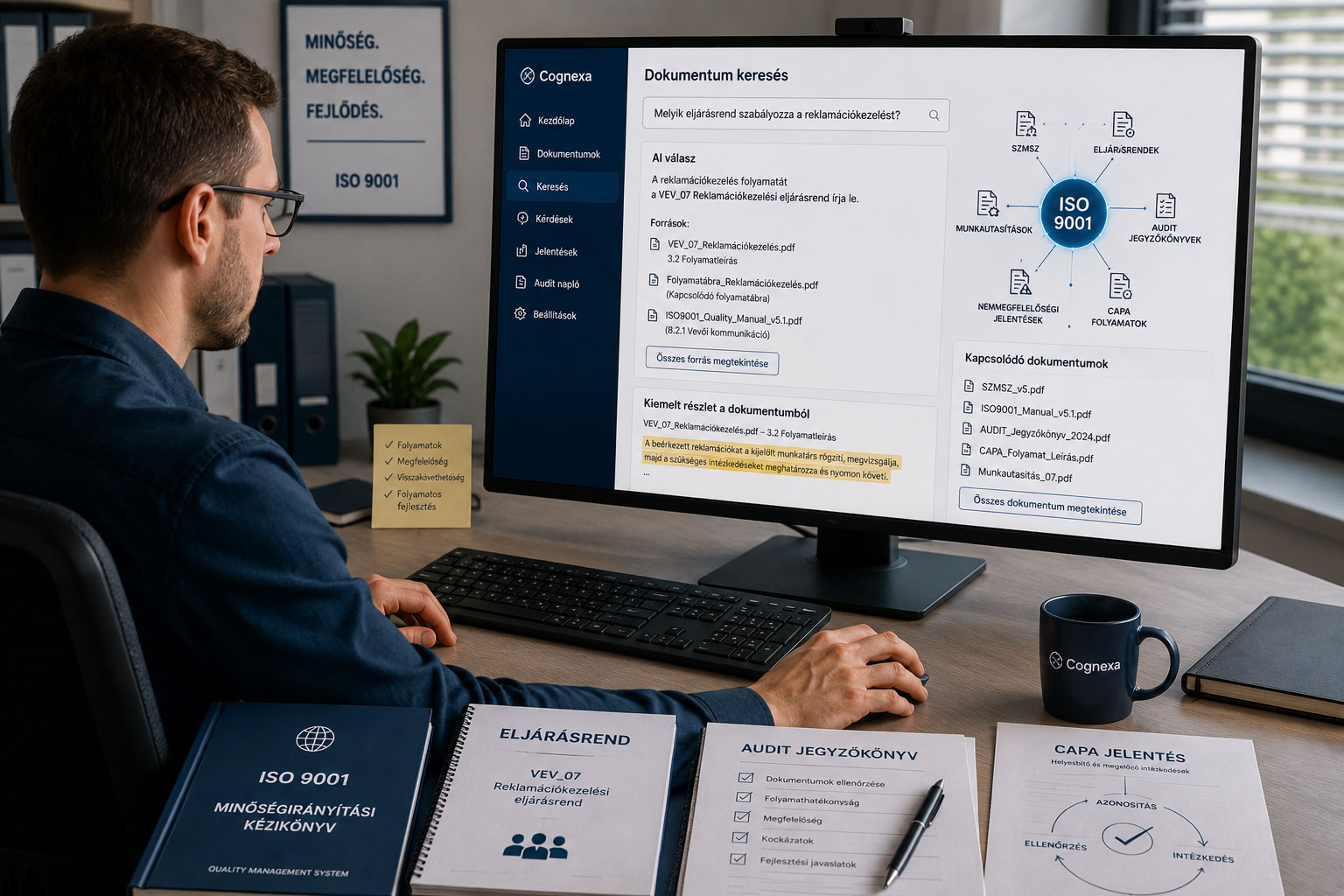
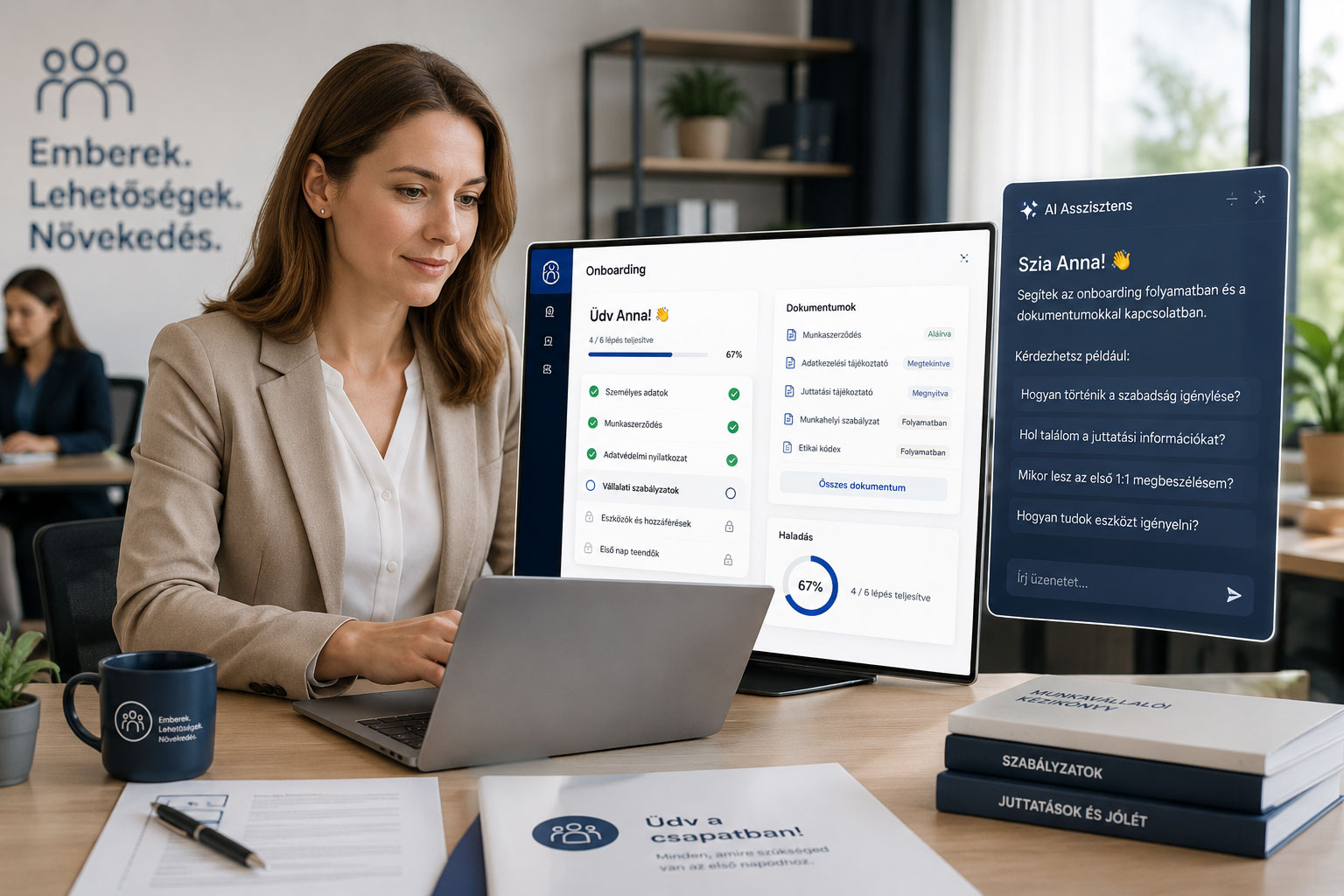
Cognexa lets employees ask questions in natural language about the company's internal documents.
The system finds the relevant information within seconds and shows exactly where it came from.
A single knowledge base for HR, managers, and employees
One of the biggest challenges for an HR department is consistency.
Every policy, process, and guideline needs to mean the same thing to every employee.
Cognexa builds a central knowledge base from the company's documents:
- HR policies
- onboarding materials
- health and safety documentation
- benefits rules
- internal process descriptions
- organizational guidelines
Colleagues get their answers from the same knowledge source.
This reduces misunderstandings and increases operational consistency.
Less administration, more value-adding HR work
A significant share of HR professionals' time goes into handling repetitive questions.
Each answered question takes only a few minutes on its own.
But added up, it can consume many work hours every month.
Cognexa doesn't work instead of the HR team.
It takes the burden of repetitive information-sharing off their shoulders.
That leaves more time for:
- talent management,
- organizational development,
- employee experience,
- strategic HR work.
Secure operation in a corporate environment
HR documents often contain sensitive information.
That's why it's especially important that data is handled with appropriate protection.
Cognexa is also available as a solution that can run on the client's own servers (on-premise).
This ensures that:
- documents stay within the company's infrastructure,
- AI use remains controllable,
- GDPR requirements are met,
- sensitive HR data never reaches external systems.
Modern onboarding isn't a document package. It's instant access to knowledge.
Today, employees expect the same thing at work as they do in everyday life:
fast, accurate, and easily accessible information.
Corporate knowledge isn't valuable because it's documented.
It's valuable because it's accessible at the right moment.
Cognexa helps with exactly that.
It connects the company's documents, processes, and knowledge in a single intelligent system.
Your documents. On your server. AI you can trust.